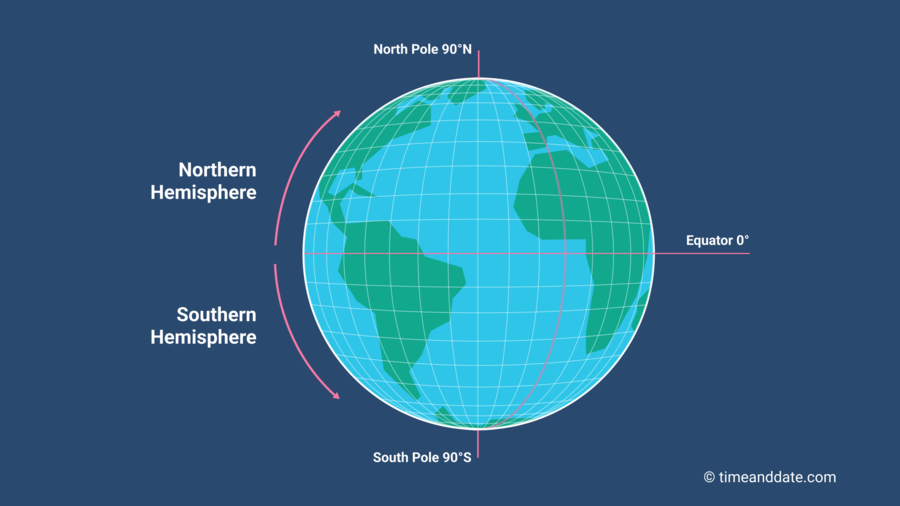
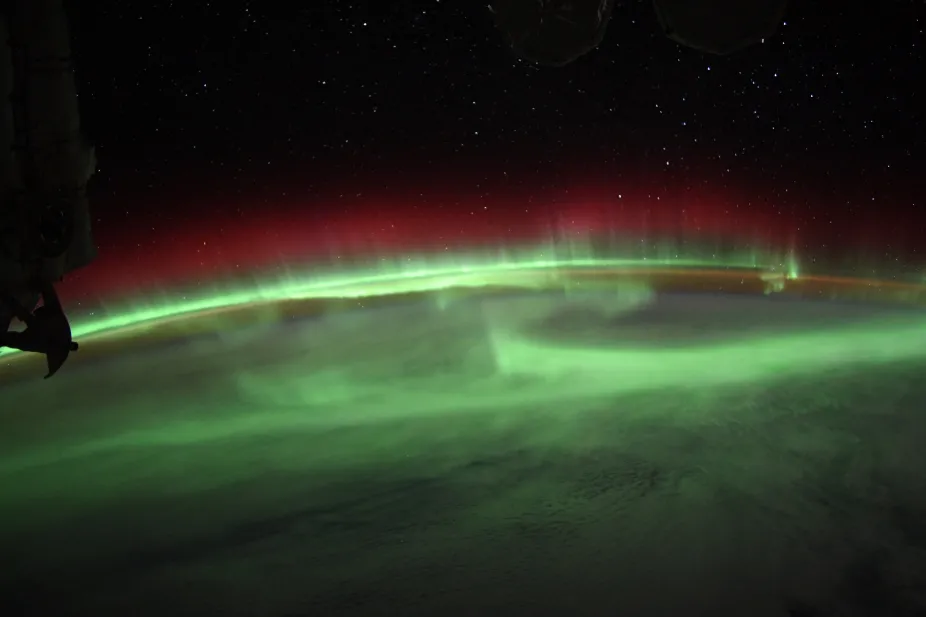
The Northern Lights (Aurora Borealis) and Southern Lights (Aurora Australis) are beautiful, colorful lights that dance across the night sky near the North and South Poles.
They look like glowing green, pink, or purple curtains or ribbons. They are not stars, planets, or meteors—they are a light show that happens inside Earth's own atmosphere.
Upper Image: A brilliant stream of the southern lights or aurora australis is photographed from the International Space Station as it orbits 270 miles above the Indian Ocean near Antarctica on August 17, 2022.
Planet Earth — a giant mass of water and mud revolving in space — is the only known “home sweet home,” formed just for us as it gives us food to eat, water to drink, and air to breathe, making it a perfect breeding ground for life to evolve.
But have you ever wondered: How did this giant planet come into existence in the first place?
I'm sure you did. So let me tell you this astonishing story of the Earth’s formation.
💥 The Beginning: The Big Bang
It all began a long time ago, about 15 billion years ago, when the whole universe was inside a tiny bubble called the Cosmic Egg.
Then, about 13.8 billion years ago, the little bald bubble began heating up and generating energy until it finally exploded with a bang. Today, we call this massive explosion the Big Bang.
This rendering of the Titanic is based on 715,000 photos and millions of laser scans of the famous wreck, which were stitched together to create a perfect digital replica of what remains of the ship.
IMAGE BY MAGELLAN LIMITED/ ATLANTIC PRODUCTIONS
Thanks to revolutionary advances in 3D scanning and photogrammetry, visiting the wreck of the Titanic no longer requires a deep-sea expedition. A team led by Magellan Limited, in collaboration with Atlantic Productions, has created a “digital twin”—a perfect, high-resolution, three-dimensional replica of the ship as it rests on the ocean floor.
This model is constructed from 715,000 photographs and millions of laser scans, producing 16 terabytes of data. Two remotely operated submersibles, Romeo and Juliet, carried out the scan over three weeks in 2022. The result is the largest underwater 3D model ever created and the subject of the new National Geographic documentary Titanic: The Digital Resurrection. The finished model allows users to zoom in on small artifacts such as a teacup, a valve, or even the etched identification number 401 on the Titanic’s propeller. “401” was the Titanic’s shipbuilding ID at Harland and Wolff in Belfast, where she was constructed.
🕹️ A Historian’s Virtual Dive
Parks Stephenson, a naval historian and Titanic expert, has seen the real wreck twice since 2005 but describes the digital twin as far more revealing. Through it, he can walk around a life-sized projection of the ship, peer inside rooms, and even inspect engine valves—details invisible from a cramped submersible viewport.
The model revealed, for instance, that a steam valve in the boiler room was left open, possibly to power emergency systems during the sinking. The scan also supports Stephenson’s theory that the stern spiraled downward, explaining its fragmented state, while the bow remains intact and wedged neatly in the seabed.
🧭 The Evolution of Digital Preservation
The creation of digital replicas of heritage sites dates back to photogrammetry, developed in 1858 by engineer Albrecht Meydenbauer after a near-fatal accident while surveying a church. Modern techniques combine this method with LiDAR laser mapping and high-performance computing.
Notable precedents include:
Stanford University’s 2000 3D model of Michelangelo’s “David”, later used to 3D-print a nearly perfect replica.
Projects like CyArk’s digital preservation of Nigeria’s Osun-Osogbo Sacred Grove and Ukrainian cathedrals damaged by floods and war, supported by Google Arts & Culture. CyArk created a 3D model of Nigeria’s Osun-Osogbo Sacred Grove shortly before floodwaters destroyed its ancient shrines.
Treasured cultural sites, like St. George’s Cathedral, a World Heritage site in Lviv, Ukraine,
have been digitized inside and out. If they are ever damaged by climate change,
a natural disaster, or war, they can be rebuilt from the copy.
Photograph by Matt Propert; Rendering by Andriy Hryvnyak, Skeiron
These efforts ensure cultural heritage can be preserved or even rebuilt if lost to disaster or conflict.
🏛️ A New Era for Archaeology and Access
3D scanning is transforming archaeology by providing exact, non-destructive documentation of fragile sites.
Titanic historian Parks Stephenson described his experience walking virtually around the digital model. Having previously visited the real wreck twice, he said the digital experience offered far more clarity. The virtual model allowed him to look into the ship’s boiler rooms, control stations, and engine compartments. The scan even revealed a steam valve left open, possibly to power emergency lighting during the ship’s final moments.
Allison Emmerson of Tulane University, for example, uses handheld photogrammetry to create a digital twin of Pompeii, allowing researchers to “excavate” and study layers virtually—without further damaging the site. Her digital model revealed that a Pompeii building served both as an eatery and a manufacturing space for reed goods.
This approach enables:
Virtual reconstructions (adding or removing walls and roofs)
Remote collaboration among archaeologists
Public sharing of detailed cultural heritage
However, many such models remain locked in private archives, inaccessible to the public—a problem Emmerson hopes to change by open-sourcing her work.
⚓ Titanic’s Digital Future and Ethical Implications
The Titanic’s digital twin offers a non-invasive way for the public and researchers to experience the wreck. Until now, many expeditions have been private, with little data sharing, leaving major knowledge gaps. Stephenson argues that the ship should be treated as an archaeological site, not a playground for wealthy tourists.
Physical expeditions have damaged the wreck—submersibles have stripped masts and gashed the hull. With the Titan submersible disaster still fresh, experts hope digital exploration will reduce human interference.
Still, the Titanic remains magnetically compelling. Some, like oceanographer Robert Ballard (the oceanographer who co-discovered the Titanic in 1985), admit a digital model can’t replace the real thing—but it may help preserve what’s left. His advice to future explorers:
“Don’t touch it. Don’t get married on it.”
🎬 Conclusion
The creation of the Titanic’s digital twin marks a transformative step for cultural heritage preservation. By combining cutting-edge scanning, LiDAR, and photogrammetry, researchers can safeguard endangered sites while offering unprecedented public access. The project exemplifies how technology can balance exploration with conservation, ensuring that humanity’s history is preserved both physically and digitally for generations to come.
More scientists are using digital replicas to allow the study of everything
from artifacts to human remains
—like this ancient Nepalese child’s skull—without damaging them.
PHOTOGRAPH COURTESY JULIA GRESKY, GERMAN ARCHAEOLOGICAL INSTITUTE (DAI)
In other words, the Titanic’s rebirth as a meticulously accurate 3D model signals a new age in cultural preservation—where exploration no longer means destruction. Digital twins not only safeguard history but also democratize it, allowing anyone, anywhere, to walk the decks of the Titanic—without ever touching the ocean floor
Aerial view of the Amazonian jungle on a flight from La Paz to Rurrenabaque, 2014. OpenAI has announced the winners of a its 'OpenAI to Z Challenge' that hopes to help archaeologists cut through the rain forest not with machetes, but with machine learning.
Photograph by Matthieu Paley, Nat Geo Image Collection
🌳 Deep in the Amazon Rainforest — hidden under layers of green trees and vines across nine countriesand home to hundreds ofIndigenous groups today— there may be thousands of ancient sites where people once lived more than 13,000 years ago! These places hold clues about early civilizations: stone tools, paintings, and buried structures.
But there’s one big problem: the Amazon is HUGE (millions of square miles!), remote, and densely covered by jungle, and really hard to explore. Traditional digging or hiking can’t keep up — sites are disappearing faster than they’re discovered due to development, logging, and climate change .That’s where Artificial Intelligence (AI) comes in.
🤖 AI to the Rescue!
Two archaeologists teamed up with OpenAI, the company behind ChatGPT, to launch a global contest. The challenge?
➡️ Use computers to scan satellite images and find hidden signs of ancient human activity in the rainforest. OpenAI let tech experts use Artificial Intelligence (AI) and machine learning to analyze massive sets of satellite images and remote sensing data to spot possible hidden archaeological sites.
The winning team, called Black Bean, used super-smart AI models to analyze huge sets of data — from NASA, Google Earth, and LiDAR scans (special sensors that use laser light to map the land).
🌍 They found 67 possible sites across the Amazon — many near rivers and streams, which makes sense because ancient people often lived near water. Each spot is roughly one square mile and might contain clues to ancient human life.
💬 “Our results make sense!” said Yao Zhao, one of the winners. “Ancient people needed water to live — and that’s where we found clues.”
🏆 The team won $250,000 and special credits to keep using OpenAI’s advanced tools.
Team Black Bean 🫘used:
🌐 Public satellite images from NASA and Google Earth Engine
🛰️ LiDAR data, which uses laser pulses to map ground elevation even through tree cover
🧠 GPT-4o, an OpenAI model trained to recognize the patterns of known archaeological sites and apply them to unexplored areas
The team trained deep learning models on several publicly available datasets, including remote sensing LiDAR data and satellite images from Google Earth Engine and NASA’s digital elevation models, among others.
The team says they then used OpenAI's GPT-4o model to learn the pattern of known archeological sites in the Amazon rainforest and compare them to unexplored swaths of the Amazon, mainly in Brazil. It then highlighted dozens of coordinates for future exploration.
LiDAR satellite image showing the Rio Negro, one of the largest tributary rivers of the Amazon. The winners of the OpenAI archaeology challenge identified 67 distinct square mile patches they recommend explorers search to find potential ancient sites. Many were near water.
Photograph by Matthew Hurst, JAXA/Science Photo Library
🛰️ How This Tech Helps Archaeologists
Machines can scan millions of square miles of data in weeks, finding patterns humans might miss — something humans would take years to do! It helps scientists spot patterns and find potential sites faster.
Dr. Sarah Parcak, a space archaeologist, has already used satellite images, thermal imaging and LiDAR to find lost tombs and settlements in Egypt and Tunisia. She says AI is the next big step:
it can look beyond known sites to reveal completely new areas to explore. With new AI tools, researchers can explore entirely new regions — not just known historical areas.
But time is running out. Rising seas, construction, and deforestation are erasing ancient history faster than we can study it.
🕰️ “We have a limited time to document Earth before it changes forever,” says archaeologist Chris Fisher.
⚖️ The Ethical Side
Not everyone is cheering. Some critics say companies like OpenAI should have consulted Indigenous communities living in the Amazon first. These groups may see the exploration of their ancestral lands as intrusive or disrespectful.
Brazil’s Indigenous ministry even asked OpenAI to pause the challenge until it could explain its purpose.
OpenAI responded that all data used was publicly available, and no maps included uncontacted Indigenous tribes.
Zhao’s team also said they plan to share results with scientists — but won’t visit any sites without careful consideration for the local communities.
🏺 What’s Next?
Parcak and Fisher think more private companies will start using AI to help archaeologists, as government funding for archaeology declines.
Both archaeologists agree that AI won’t replace human experts. Instead, it will help them uncover more of Earth’s hidden history faster.
🧠 “AI scales what remote sensing scientists have been doing for decades,” says Parcak. “It’s not about replacing us — it’s about empowering us.”
But they remind everyone:
“AI won’t replace archaeologists. It just helps us work smarter.”
🧭 The future of archaeology might start with a computer — but it still needs human curiosity to uncover the past.
Microbes are everywhere — in soil, rocks, oceans, and even inside your body! Your microbiome (the collection of microorganisms living on and inside you) affects your health.
🧬 Scientists studied the microbiome of mummified ancient Egyptians by analyzing their DNA (aDNA). They discovered:
Microbes that cause gum disease
Evidence of leprosy, hepatitis, and other infectious diseases
📍 Location: Mummies came from Abusir el-Meleq, Middle Egypt (see map).
📘Glossary of Key Terms
Ancient DNA (aDNA): DNA from long, long ago.
Bacteria: Single-celled organisms with cell walls but no nucleus.
BCE and CE: Before Common Era / Common Era (modern calendar terms).
DNA sequence: The exact order of bits of DNA; sequencing finds this order.
Environmental microbiome: Microorganisms living in soil, air, and water.
Genetic: Related to genes.
Genome: Complete set of genetic information in an organism.
Hepatitis B virus (HBV): Infects the liver.
Microbiome: Microorganisms living in or on an organism.
Leprosy: Infectious disease affecting the skin.
Mummy: Preserved body of a dead organism.
Oral: Involving the mouth.
Pathogen: Any organism that causes disease.
Strain: A distinct variety within a species.
Tartar: Hard substance that builds up on teeth.
Virus: Small piece of DNA or RNA inside a protein coat that replicates inside cells.
🔍 Introduction
Your health depends on your microbiome — bacteria, fungi, and viruses living in and on your body. Some microbes:
Help digest food 🍎
Cause illness 🤒
Are still a mystery! ❓
Scientists wanted to understand how ancient pathogens evolved. By studying ancient DNA (aDNA), they can learn what diseases affected people long ago.
💡For the curious:
Pathogens are germs that cause diseases and are spread through infection. These usually don’t live on your body, but are spread through infection. Knowing what pathogens existed long ago also helps us know how they evolved.
🧫 Methods
It is hard to work with aDNA!
Heat, humidity, and age make DNA molecules fall apart. That’s why aDNA usually only exists in fragments (broken pieces). For a long time, the technology to read DNA wasn’t good for reading aDNA. Methods that work for modern, intact DNA don’t work well for ancient, fragmented DNA. But new methods and more powerful computers make it possible to reconstruct genomes from aDNA.
Other scientists used this method to study aDNA from humans and animals. But until now, no one had ever used this method to identify ancient microorganisms in mummified ancient Egyptian people!
We extracted DNA from tiny samples of the bones, soft tissue, teeth, and tartar of mummified people. We analyzed a total of 133 samples from 119 mummies. The archaeologist Otto Rubensohn excavated these people’s mummified remains between 1902 and 1905. These people lived in Abusir el-Meleq, Middle Egypt, which was inhabited at least from 3,250 BCE to 700 CE.
Can you imagine shredding a whole bookshelf and trying to put the books back together again? Reconstructing the full DNA sequence from an ancient bacterium is a bit like that.
We used a new technology designed to reconstruct DNA from mixed-up pieces. It reads the genetic code in each fragment, starting at each end. The two ends of the sequence are merged together. The computer compares the merged pieces to a library of known genetic sequences. With enough matches (and a powerful enough computer), we can identify the species. We can also reconstruct the majority of its genome!
Since this method reads all the DNA sequences it can find, we needed to make sure we weren’t just finding microbes from the environment. We compared the DNA we found on the mummies with DNA found in soil from Egypt. We also wanted to be sure the DNA was actually ancient. Just like paper turns brown and crumbly with age, there are signs we can look for in DNA to help us know how old it is. Seeing damaged DNA in our samples gave us confidence that we really were finding ancient DNA.
Method Sumary:
Studying aDNA is difficult because:
Heat and humidity break DNA apart over time 🌡️
DNA exists only in tiny fragments
🧩 Researchers used new computer technology to piece together these fragments — like assembling shredded paper back into readable pages.
They:
Extracted DNA from bones, soft tissue, teeth, and tartar of 119 mummified people.
Compared this DNA to soil samples to make sure it wasn’t modern contamination.
Verified the DNA’s age by checking for damage patterns typical of ancient DNA.
📚 The process is like finding matching words in a shredded document to confirm what sentences were originally written.
🧠 Results
We successfully reconstructed the genomes of Mycobacterium leprae, the bacterium which causes leprosy. The leprosy bacterium that we found is 2,200 years old. As far as we know, that makes it the oldest ever found! We compared it to other strains of the bacterium. The leprosy bacterium strain we found is related to modern strains found in West Africa and Brazil.
We also reconstructed the genome for the hepatitis B virus (HBV). By our estimate, the HBV we found is 2,000 years old.
We found three other bacteria in the samples of bone and soft tissues:
Proteus mirabilis– causes urinary tract and wound infections.
Enterococcus faecalisand Enterococcus faecium– live in the intestines of healthy people but can cause serious illness elsewhere.
In the tooth and tartar samples, we identified many oral bacteria and found evidence of three bacteria that cause gum disease.
📊 Figure 1 shows pie charts comparing sources of bacterial DNA:
🟧 Modern tartar bacteria
🟪 Oral bacteria
🟩 Soil bacteria
⚪ Unknown sources
Tartar samples had the most identifiable DNA.
In short, scientists reconstructed ancient genomes of:
🦠 Mycobacterium leprae (causes leprosy) — 2,200 years old, oldest known strain! → Related to modern strains in West Africa and Brazil.
🧫 Hepatitis B virus (HBV) — about 2,000 years old.
They also found:
Proteus mirabilis – causes wound and urinary infections
Enterococcus faecalis & E. faecium – usually harmless gut bacteria but dangerous if they spread elsewhere
Oral bacteria causing gum disease 🦷
💬 Discussion
We showed that it is possible to sequence DNA from mummified ancient Egyptian people. We reconstructed the genome of two ancient pathogens. We found signs of other bacteria as well, including some common species that live in the mouth.
Much of the DNA we found didn’t match anything in the library of known DNA sequences. This is because no one has studied the vast majority of microorganisms in the environmental microbiome yet.
We found other microorganisms that help with decomposition. They would not have been on the people we studied while they were still alive. Some of the unknown DNA could be from microorganisms that were common 2,000 years ago in Egypt but are less common now.
We hope that our success in finding ancient pathogens helps other scientists find out about the germs of the past.
✅ IN SHORT: This research proved it’s possible to read DNA from mummified remains.
They reconstructed ancient pathogens and discovered:
Many unknown DNA sequences (possibly extinct microbes)
Some DNA linked to microbes that existed 2,000 years ago but are rare today
🧫 Environmental microbes (from decomposition) were also found but weren’t part of the ancient microbiome.
🧾 Conclusion
When you see Egyptian mummies in books and museums, it’s important to remember that they are mummified people who lived long ago. Like us, they lived in a world of microbes. They struggled with many of the same diseases that people today suffer from.
We are lucky to live in a world where vaccines and antibiotics exist! For example, the vaccine against Hepatitis B is available to almost all children in the world, and leprosy is now curable by antibiotics.
You can help make sure you and your family stay healthy by getting all recommended shots and taking antibiotics only the way your doctor prescribes.
IN SHORT:
Mummies were once real people who lived among countless microbes — just like us! They faced many of the same diseases humans face today.
💉 Thanks to modern medicine, we now have:
Vaccines (e.g., Hepatitis B)
Antibiotics (e.g., to cure leprosy)
👨⚕️ Stay healthy:
Get vaccinated
Use antibiotics only when prescribed
🧩 Check Your Understanding
Why do scientists study ancient microbiomes?
What makes ancient DNA hard to analyze?
How did researchers confirm the DNA was ancient?
Where else could scientists search for ancient germs?
People with tetraplegia can’t move or feel their hands due to spinal cord injuries. Scientists wanted to help by creating a robotic arm controlled directly by the brain. In earlier work, a person used their sight to guide the robotic arm.
Later, researchers added touch implants in the part of the brain that senses touch. This allowed the person to “feel” when the robotic hand touched an object. With this improvement, the person completed tasks twice as fast using both sight and touch.
Introduction
There are around 170,000 people in the U.S. with tetraplegia. They cannot move or feel their arms and legs.
Researchers built a brain-computer interface (BCI) — a system that translates brain signals into commands for machines.
In the first version, the person used only visual feedback to move a robotic arm — it worked but was slow.
The new version added touch sensors to the robotic hand, allowing the brain to both send and receive signals.
This two-way system is called a bidirectional brain-computer interface (BBCI).
Methods
Researchers implanted four microelectrode arrays in a volunteer’s brain:
Two controlled movement.
Two received touch signals.
The participant used the robotic arm to:
Pick up and move eight objects.
Pour liquid from one cup to another.
They performed the tasks with and without touch feedback to compare performance.
Results
Touch feedback greatly improved performance:
Highest possible score per object: 3 points.
Without touch: scored 3 only once.
With touch: scored 3 fifteen times.
Total possible score: 27.
Without touch: median 17.
With touch: median 21.
Task completion time improved from 20.9s to 10.2s.
Discussion
The BBCI made it easier and faster to move and grip objects. Touch feedback provided important sensory information, similar to natural hand sensations. Future research could test other participants or fragile objects to see if touch feedback still helps.
Conclusion
More research and scientists are needed to improve assistive technologies for people with spinal cord injuries. Such innovations could help them regain independence.